October 20, 2026
Kitchen cabinets influence far more than the appearance of a room. They determine how efficiently cookware, food, dishes, and small appliances can be stored while shaping the overall style and usability of the kitchen. The right cabinet choices can make a compact space feel more organized, improve access to everyday essentials, and create a cohesive look that complements the rest of the home. Finding the right solution begins with understanding how the kitchen is used and identifying the features that matter most to the household.
With so many materials, layouts, finishes, and storage configurations available, choosing cabinets can feel overwhelming. Homeowners need to consider their available space, preferred design, storage requirements, budget, and expectations for long-term performance. Professional cabinet services can help bring these considerations together, making it easier to compare options and select cabinetry that balances functionality with visual appeal. A well-planned decision can support daily routines while helping the kitchen remain practical and attractive for years.
Evaluating Your Kitchen's Storage Requirements
Before selecting cabinet styles, consider what needs to be stored and how frequently different items are used. Large households may need generous pantry space, additional drawers for cookware, and dedicated storage for small appliances. Smaller kitchens may benefit from cabinets that make efficient use of vertical space without crowding the room. Taking inventory of these needs helps establish a practical foundation for the design.
Professional cabinet services can help homeowners translate everyday routines into useful storage features. Deep drawers may accommodate pots and pans, adjustable shelving can provide flexibility for changing needs, and pullout organizers can improve access to items stored toward the back. The goal is to create a storage plan that minimizes clutter and keeps frequently used items within convenient reach. A thoughtful layout can make cooking, cleaning, and meal preparation more efficient.
Measuring Your Space and Improving Layout
Accurate measurements are essential when selecting kitchen cabinetry. Wall lengths, ceiling heights, window locations, doorways, appliances, and plumbing fixtures can all affect cabinet placement. Existing irregularities, such as uneven walls or limited clearance, may also influence the available options. Reviewing these details before making a selection helps prevent mismatched dimensions and installation complications.
The kitchen's overall layout should support comfortable movement between preparation, cooking, cleaning, and storage areas. Cabinets need to work with the refrigerator, range, dishwasher, and sink rather than obstructing access or creating awkward corners. Experienced professionals can evaluate these relationships and recommend arrangements that make the most of the available footprint. Careful planning helps ensure the cabinets fit the room while supporting a more convenient workflow.
Comparing Cabinet Materials and Construction
Cabinet materials influence durability, appearance, maintenance, and overall value. Solid wood offers natural grain patterns and a distinctive appearance, while plywood and engineered wood products provide alternatives with different construction characteristics. Cabinet doors and drawer fronts may use materials that differ from the cabinet boxes, so homeowners should review the complete construction rather than judging a product by its exterior alone. Understanding these distinctions makes it easier to compare options fairly.
Construction quality matters just as much as material selection. Drawer joints, hinges, slides, door alignment, and the stability of cabinet boxes can affect how cabinetry performs during everyday use. According to HomeAdvisor, custom cabinets may last more than 25 years, approximately twice as long as many prefabricated alternatives. Actual longevity depends on construction, installation, maintenance, and usage, so homeowners should evaluate quality alongside appearance when making a long-term investment.
Selecting Finishes and Coordinating Colors
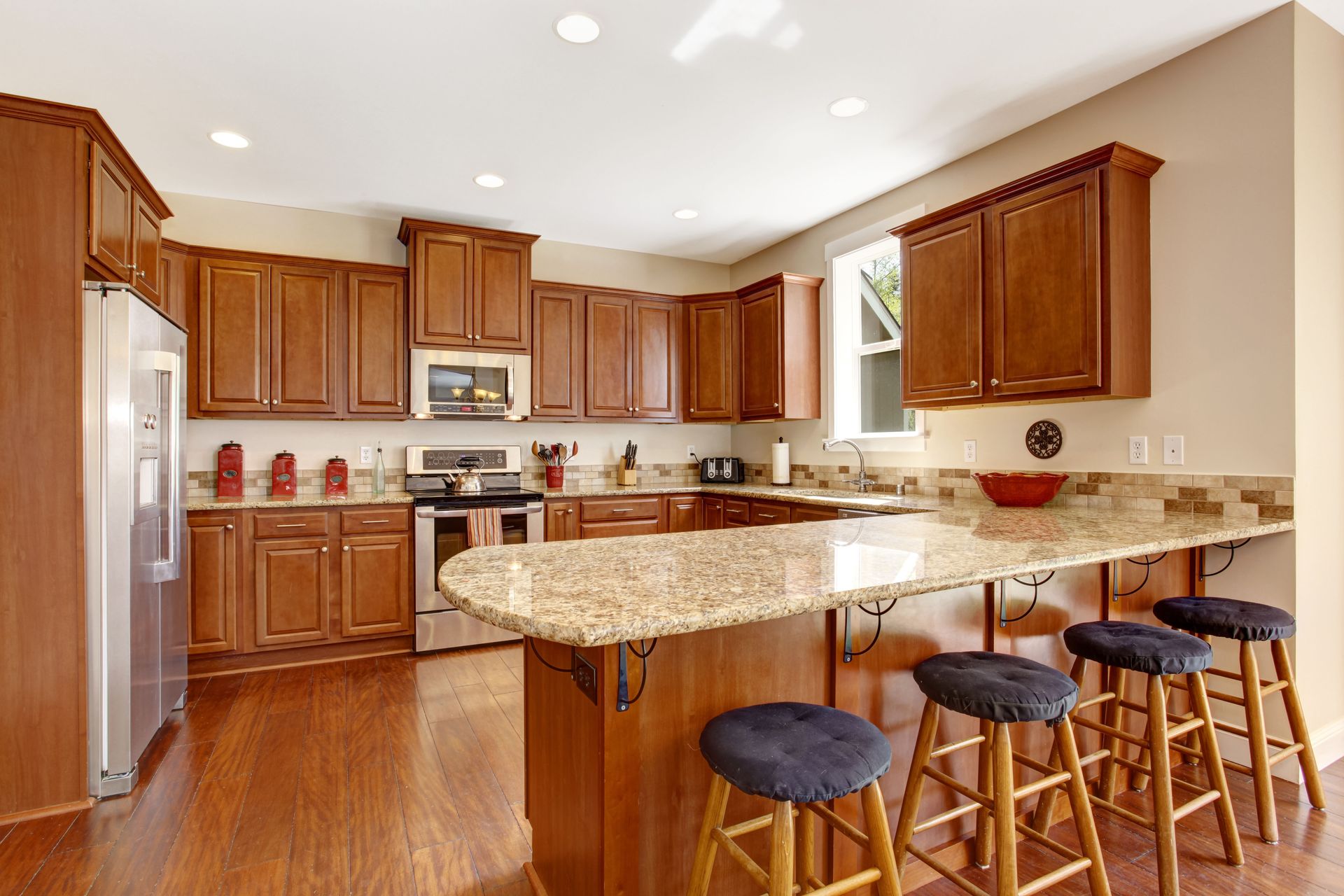
Cabinet finishes have a significant influence on the kitchen's overall atmosphere. White and other light colors can create a bright, open appearance, while darker finishes may add contrast and visual depth. Natural wood tones can introduce warmth and complement a variety of interior styles. The right choice depends on the room's lighting, flooring, countertops, backsplash, and the look the homeowner wants to achieve.
It is helpful to consider how cabinet colors will appear throughout the day as natural and artificial lighting changes. Glossy finishes may reflect more light, whereas matte surfaces create a more subdued appearance. Homeowners should also consider how easily a finish can be cleaned and whether it will continue to complement other design elements if those features change later. Coordinating these details helps create a kitchen that feels cohesive rather than visually crowded.
Choosing Cabinet Styles and Door Designs
Door profiles help establish the kitchen's design direction. Shaker-style doors offer clean lines that work in many traditional and contemporary settings, while flat-panel doors create a streamlined appearance suited to modern interiors. Raised-panel designs can introduce more decorative detail for homeowners who prefer a classic look. Comparing styles in the context of the entire room helps prevent a design choice from feeling disconnected from the home's architecture.
Hardware adds another layer of customization. Handles, knobs, and pulls can complement cabinet finishes while influencing how comfortable doors and drawers are to operate. The scale, shape, and finish of these details should suit the cabinetry rather than compete with it. Professional cabinet services can help coordinate door styles and hardware to create a consistent appearance that reflects the homeowner's preferences.
Maximizing Storage With Specialized Features
Standard shelves may not meet every household's storage needs, particularly in kitchens with limited space or numerous cooking supplies. Specialized features can help make cabinets more accessible and reduce wasted space. Pullout pantry systems, drawer dividers, tray organizers, and corner storage solutions can make it easier to locate items without rearranging everything nearby. These features are especially useful when the kitchen needs to accommodate a variety of cookware, food containers, and appliances.
Storage accessories should be selected according to actual usage rather than added simply because they are available. Heavy cookware may be better suited to sturdy, easily accessible drawers, while baking trays can benefit from vertical dividers. Frequently used ingredients may deserve a convenient location near the preparation area. Thoughtful
cabinet services focus on making storage functional for the household, ensuring that specialized features contribute to everyday convenience.
Balancing Custom, Semi-Custom, and Stock Options
Cabinet purchasing options offer different levels of flexibility. Stock cabinets are generally produced in standard sizes, making them a practical choice for kitchens with straightforward dimensions. Semi-custom cabinets provide additional choices in sizing, finishes, and configurations, while custom cabinetry allows a design to be tailored more closely to a property's specific requirements. The right category depends on the available space, design priorities, timeline, and overall project budget.
Homeowners should compare the complete value of each option rather than focusing only on the initial purchase. Standard products may work well in a conventional layout, while unusual room dimensions or specialized storage needs may justify a more customized approach. It is also important to consider finishing details, hardware quality, installation requirements, and how well the cabinetry integrates with existing features. A clear comparison helps homeowners select an option that meets both practical and aesthetic goals.
Finding the right cabinetry means balancing storage needs, available space, construction quality, design preferences, and long-term expectations. By considering these factors together, homeowners can create a kitchen that supports daily routines while reflecting their preferred style. At Cabinets of Port Orange, we help homeowners explore cabinet solutions that fit their spaces and project goals. Contact our team to discuss your kitchen plans and learn how we can help you select cabinetry that brings functionality, organization, and a cohesive look to your home.